TCM-Integrated Wound Care
China's specialist DFU hospitals run TCM and Western wound care as parallel treatment streams — dedicated TCM physicians, custom herbal dressings, and acupuncture for circulation alongside modern debridement, vascular intervention, and pharmacotherapy.
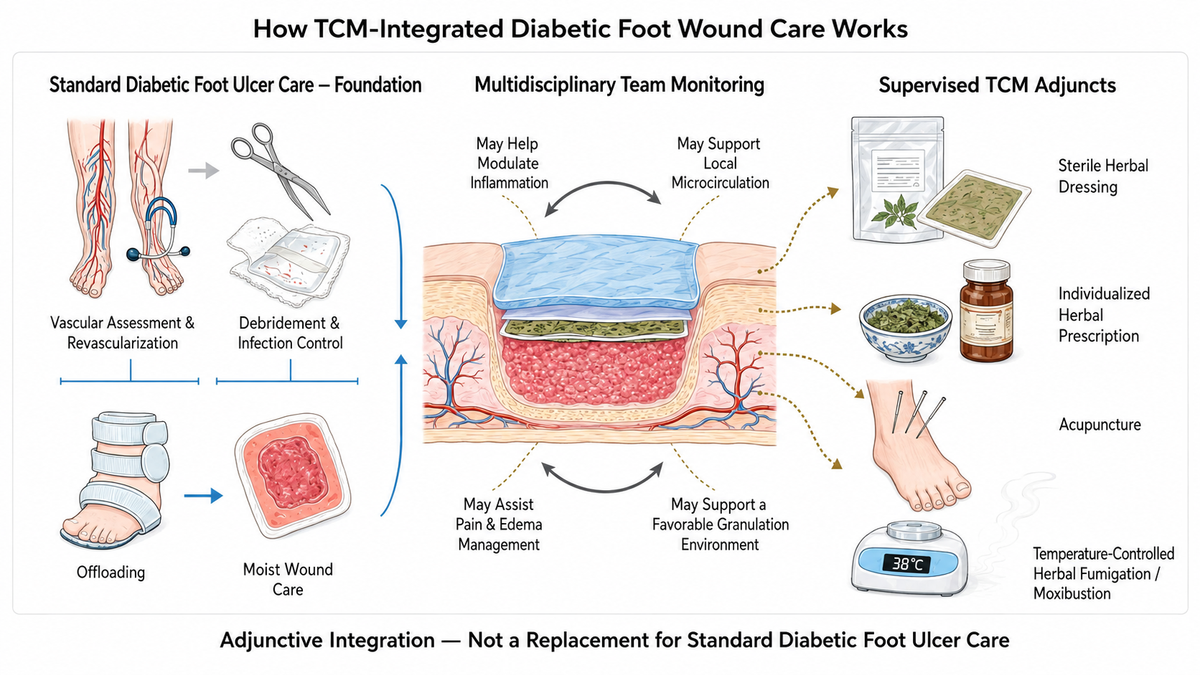
China's specialist DFU hospitals do not choose between Eastern and Western medicine — they use both in a structured, evidence-informed integration. Patients receive a Western vascular and wound-care workup alongside a TCM constitutional assessment, and a dedicated TCM physician works alongside the vascular surgeon and wound-care nurse as part of the multidisciplinary team. China's national DFU guidelines (2023) formally recognize TCM as a complementary modality within the comprehensive treatment pathway.
Five TCM modalities used for DFU
- Topical herbal preparations — Huangqi (Astragalus membranaceus) dressings for anti-inflammatory and pro-angiogenic effects; Huanglian (Coptis chinensis) extracts with in-vitro activity against MRSA and ESBL organisms; Xiaozhang formula (Danshen + Sanqi + Dilong) for oedema and granulation in damp-heat wounds; formulated fresh in the hospital pharmacy and applied under sterile conditions
- Oral herbal formulae — blood-activating and stasis-resolving formulations such as Taohong Siwu Tang for ischaemic patterns; adjusted weekly to wound response; an RCT (ECAM, 2019) found Shen-Tong-Zhu-Yu Tang combined with conventional care improved healing rates and reduced CRP and IL-6
- Acupuncture — primarily for peripheral circulation and pain modulation; a 2020 meta-analysis in Frontiers in Physiology found significantly increased skin microvascular perfusion by laser Doppler in diabetic peripheral neuropathy; used in painful neuropathy limiting offloading compliance and in documented microvascular impairment
- Herbal fumigation (xun xi fa) — controlled-temperature steam of herbal decoction directed over the foot to improve peripheral circulation and reduce peri-wound oedema; supervised by nursing staff with controlled-temperature equipment; never applied with DIY methods that risk thermal burns in neuropathic patients
- Moxibustion — burning dried mugwort near acupuncture points for cold-pattern or Qi-deficient presentations where the wound lacks warmth and perfusion for granulation; used with temperature control, not applied directly over neuropathic skin
Evidence base
A 2021 systematic review in Diabetes/Metabolism Research and Reviews (18 RCTs, n=1,422) found that integrated TCM-Western treatment significantly improved wound healing rates (OR 1.87, 95% CI 1.48–2.36), reduced infection markers, and shortened hospital stay versus Western care alone. The limitations of TCM research are real — heterogeneous preparations, small sample sizes, variable outcome measurement. Partner centers apply their own evidence filters, using modalities with the strongest clinical signal while maintaining full Western wound-care protocols as the primary base.
What patients experience
On arrival, patients undergo a dual workup: Western vascular assessment alongside a TCM constitutional consultation. TCM elements begin in the first week in parallel with Western wound care. Oral formulae are dispensed daily from the hospital pharmacy; dressing changes include the herbal layer. Acupuncture is typically three to five sessions per week; response is assessed every 7–10 days and formulations adjusted. The TCM physician explains reasoning in terms that connect to Western-medicine concepts of blood flow, inflammation, and immune response.
TCM-integrated wound care is structurally unavailable in the US and most of Europe — not because the evidence does not support it, but because the clinical infrastructure (trained TCM physicians embedded in wound-care teams, hospital pharmacies producing fresh herbal preparations, and institutional protocols integrating both frameworks) does not exist. China's national DFU guidelines (2023) formally recognize TCM as a complementary modality, and partner hospitals have developed mature dual-track protocols that most Western centers cannot replicate.
References
- Li S et al. Traditional Chinese medicine for diabetic foot ulcers: a systematic review and meta-analysis. J Ethnopharmacol. 2021;272:113890.
- Zhang J et al. Chinese herbal medicine for diabetic foot ulcers: a systematic review and meta-analysis. Complement Ther Med. 2019;46:178-188.
- WHO Traditional Medicine Strategy 2014-2023. World Health Organization. 2013.
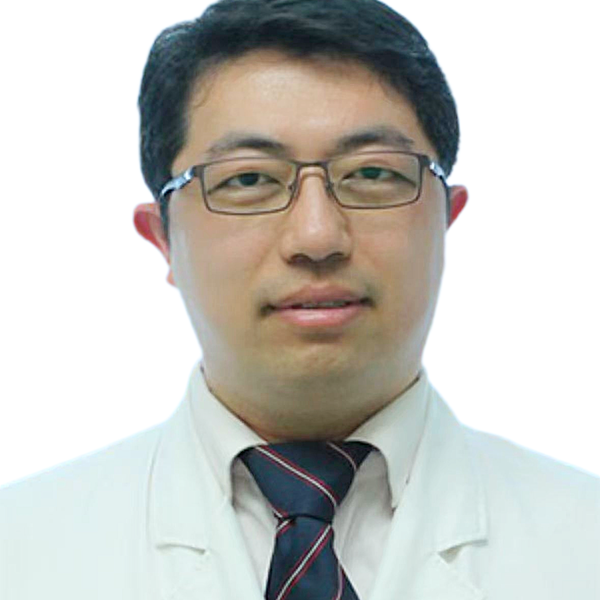
Doctors who perform this treatment
What does this cost?
All-in costs at China's specialist DFU centres — including inpatient stay, procedures, and coordination — are typically far lower than equivalent private care in the US, UK, or EU. Most patients self-pay; we also support insurance reimbursement documentation. We provide a transparent itemised estimate before you commit to anything, at no charge.
Request a free cost estimate →Free medical record review
Share your diabetic foot ulcer records for a free specialist review. Our care coordination team responds within 24–48 hours with an honest assessment.
This website provides medical-information science popularization only. It does NOT provide online diagnosis, prescriptions, or medical advice. Consult a licensed physician for any medical decision.