إعادة الأوعية الدموية بدقة أسفل الركبة
رأب الأوعية بالبالون الدقيق والوصول الرجعي لقوس القدم للوصول إلى الأوعية المشطية التي تفوتها إعادة الأوعية الدموية القياسية - استعادة التروية الدموية المباشرة على مستوى القدم.
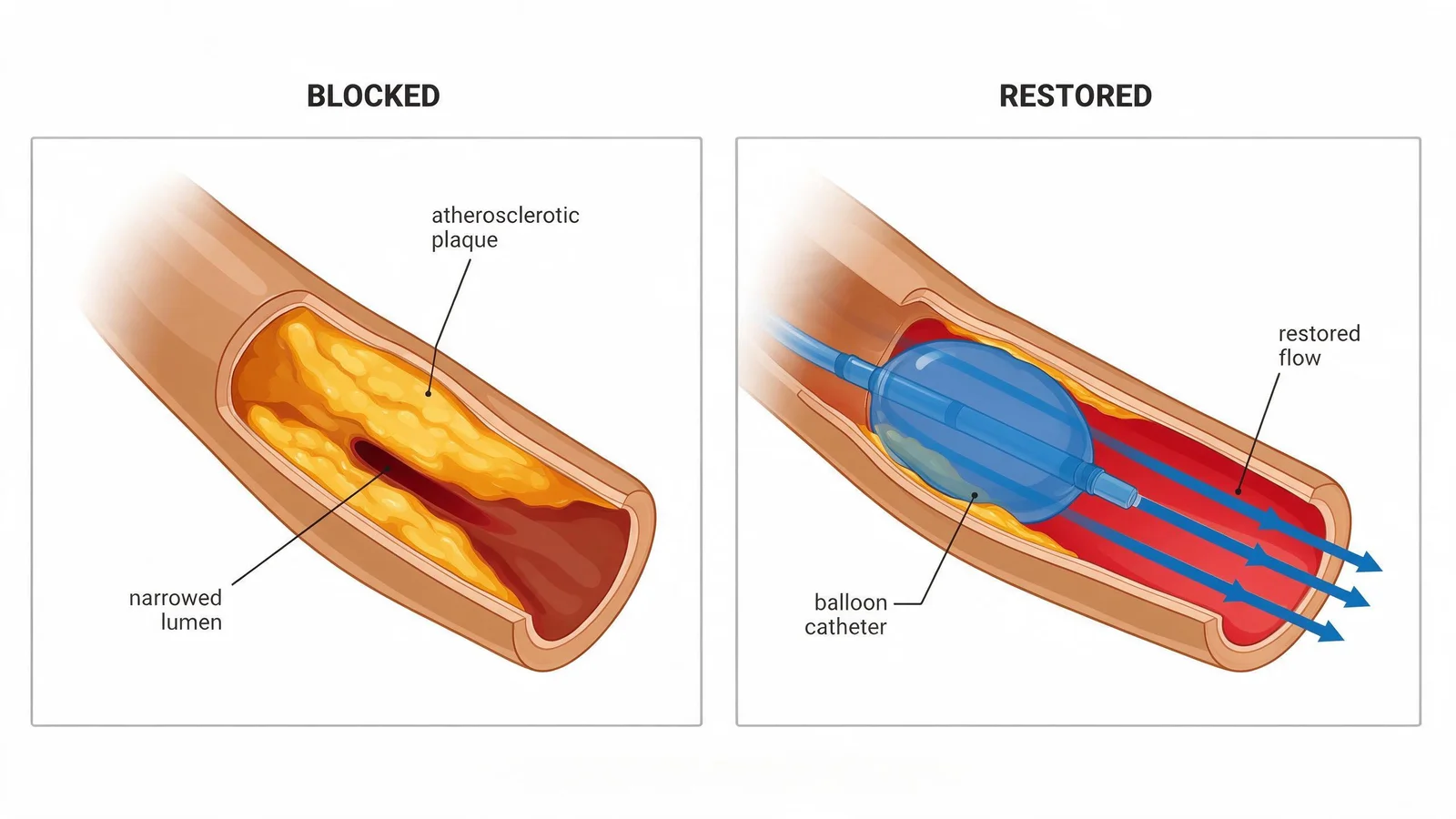
تعيد إعادة الأوعية الدموية تدفق الشرايين إلى القدم الإقفارية. يتخصص فريق الأوعية الدموية لدينا في أمراض الأوعية أسفل الركبة وقوس القدم - الأوعية الظنبوبية والشظوية والمشطية التي تحمل الدم إلى أصابع القدم. هذا هو المكان الذي ينشأ فيه معظم الإقفار المرتبط بقرح القدم السكرية، وحيث تتوقف المراكز القياسية غالبًا.
ما الذي يجعله مختلفًا
يستهدف رأب الأوعية القياسي الشرايين المأبضية والظنبوبية فوق الكاحل. كما يصل فريقنا إلى قوس القدم والأوعية المشطية باستخدام أسلاك توجيه دقيقة تاجية 0.014 بوصة وبالونات دقيقة مطلية بالأدوية. عندما يكون النهج الأمامي التقليدي (من الفخذ إلى القدم) مسدودًا، نستخدم الوصول الرجعي للقدم - الدخول عبر وعاء في القدم والعمل للخلف - لاستعادة التدفق حيث لا يمكن للتقنيات الأمامية الوصول.
الإجراء
- تصوير الأوعية المقطعي أو الدوبلكس قبل الإجراء لرسم خريطة لكل وعاء مستهدف حتى أصابع القدم
- قساطر البالون الدقيق تعبر الآفة؛ النفخ المطول يعيد تشكيل جدار الوعاء
- تُستخدم البالونات المطلية بالأدوية في الأجزاء الظنبوبية والقدمية لتقليل إعادة التضيق
- يُستخدم الوصول الرجعي للأخمص عندما لا يكون النهج الأمامي ممكنًا
- الدوبلكس بعد الإجراء يؤكد تحسن تروية القدم
التعافي
تتم معظم الإجراءات تحت التخدير الموضعي مع التخدير. يستأنف المرضى العناية بالجروح خلال 24 ساعة. يستمر العلاج المضاد للصفيحات لمدة 3-6 أشهر. يؤكد الدوبلكس للمتابعة عند 4 و8 و12 أسبوعًا سلامة الأوعية.
معظم مراكز الأوعية الدموية في الولايات المتحدة وأوروبا تتوقف عند الأهداف فوق الركبة أو المأبضية. يتخصص أطباؤنا في الدخول إلى قوس القدم والأوعية المشطية - ذات العيار الأصغر والصعبة تقنيًا - باستخدام قساطر بالونية دقيقة مصممة للعمل التاجي. الوصول الرجعي للقدم (الدخول من القدم بدلاً من الفخذ) متاح في عدد قليل من المراكز عالميًا وهو خيار روتيني هنا.
References
- Mustapha JA et al. Retrograde pedal access for revascularization of infrainguinal arterial occlusive disease. Cardiovasc Intervent Radiol. 2018;41(9):1325-1332.
- Agarwal S et al. Infrapopliteal angioplasty in patients with critical limb ischemia. J Vasc Surg. 2021;73(4):1334-1342.
- Defined daily doses of parenteral antibiotics — Cochrane Database Syst Rev. 2015.
ما هي التكلفة؟
التكاليف الإجمالية في مراكز قدم السكري المتخصصة في الصين — بما في ذلك الإقامة والإجراءات والتنسيق — أقل عادةً بكثير من الرعاية الخاصة المماثلة في الولايات المتحدة أو المملكة المتحدة أو الاتحاد الأوروبي. يتكفل معظم المرضى بالتكاليف بأنفسهم، كما ندعم توثيق استرداد التأمين. نقدم تقديراً شفافاً مفصّلاً قبل الالتزام بأي شيء، دون أي رسوم.
طلب تقدير تكلفة مجاني ←طلب مراجعة مجانية للحالة
سيراجع فريق التنسيق الطبي لدينا حالتك ويرد في غضون 24–48 ساعة.
يقدّم هذا الموقع معلومات طبية تثقيفية فحسب، ولا يُقدّم تشخيصاً عبر الإنترنت أو وصفات طبية أو مشورة علاجية. يُرجى استشارة طبيب مرخّص لاتخاذ أي قرار طبي.